
Email
info@sokingtech.com
HKS-P09A cold plasma system for a structured professional skin care service.
A professional beauty business needs more than a device on a trolley. It needs a repeatable service, clear operator responsibilities, a comfortable client experience and a purchasing decision that can be explained to partners. This case examines the HKS-P09A cold plasma system from that practical B2B viewpoint. It is written for salons, skin-care clinics, distributors and OEM buyers evaluating a cold plasma platform for a focused facial or targeted skin-care menu.
The HKS-P09A should be assessed against the supplied configuration, user manual and local professional-use requirements. The guidance below explains the visible equipment structure and a sensible workflow without adding unverified output, medical claims or unsupported specifications.
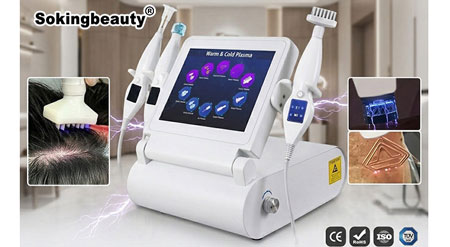
The HKS-P09A is a cold plasma skin-care system presented in a professional salon format. Its structure combines a control body, operator controls, a connection and handpiece section, and treatment interfaces selected for the confirmed service protocol. The compact station makes it suitable for a facial room, consultation-led skin studio or distributor demonstration area where staff need to explain the equipment clearly.
For a buyer, the value is not simply the word plasma. The value is a controllable platform that can be fitted into a documented service sequence. The quotation should identify the supplied heads, accessories, electrical requirements, training, warranty and support contact. Teams should only describe functions that are confirmed by the supplier documentation for the ordered configuration.
Control section
Operators use the control area to select the approved working mode and maintain a consistent sequence. The interface should remain clean, dry and easy to check before each appointment.
Connection and handpiece section
The cable and connector transfer the controlled working energy to the selected treatment interface. Staff should inspect the connection before use and avoid pulling the cable during a service.
Treatment interface and hygiene zone
The approved head is the client-facing part of the system. Its contact area, storage method and cleaning process should be defined in the supplied instructions and included in staff training.
This layered design gives a distributor a useful explanation: the buyer receives a professional platform, the operator receives a defined workflow and the manager receives a service process that can be audited. It also helps a new team understand which checks happen at setup, during treatment and at shutdown.
Cold plasma equipment works by generating a controlled plasma field at the treatment interface. In practical operation, the system and the approved handpiece deliver the working energy while a trained operator follows the confirmed mode, movement and duration in the manual. The operator should observe client comfort, skin response and the suitability of the selected protocol throughout the service.
For B2B planning, the important principle is repeatability. A defined setup, consistent preparation, approved setting and documented finishing routine help a team deliver the same type of service across different working days. The device should not be presented as a substitute for professional assessment. Instead, position it as equipment that supports a trained team when the configuration and protocol are appropriate.
Mid-service planning CTA
Need the configuration and training checklist for your market? Speak with the product team before selecting heads or building a treatment menu.
A facial salon can use the HKS-P09A as a structured add-on to a consultation-led skin-care service. A focused skin studio may use it as the centre of a small menu with defined preparation, application and aftercare steps. A clinic or professional training centre can evaluate it as part of a controlled equipment workflow. A distributor can demonstrate the system by showing how the station, handpiece, hygiene process and operator checklist work together.
The operator experience should feel calm, deliberate and easy to supervise. A clean layout, clear head identification and a short pre-service checklist reduce avoidable confusion. Managers should train staff to explain what the device does, what the client may feel, when to pause and how to document the session. Buyers should request a training outline rather than relying on a product name alone.
A focused option for buyers comparing a professional facial-care configuration and a straightforward operator workflow.
Best comparison: facial service focus, supplied handpiece and training scope.
A broader platform for teams that want to compare a multifunction format with their existing treatment menu.
Best comparison: interface choices, station layout and service documentation.
An OEM-oriented comparison point for distributors planning a branded equipment family or market-specific configuration.
Best comparison: customization, compliance files and after-sales support.
Maintenance starts with a clean, dry and organized station. After each appointment, follow the manual for cleaning and disinfection of approved external surfaces and treatment interfaces. Keep liquids away from controls unless the instructions explicitly permit a method. Inspect cables, connectors and handpiece housings for visible wear before the next session. Store accessories in a way that protects their treatment surfaces and keeps the correct head with the correct device.
A manager should maintain a simple service log covering cleaning, inspection, reported issues, training completion and any technical contact. If a connector, cable or treatment interface appears damaged, remove the unit from service and ask the supplier for a safe resolution. Do not ask an untrained person to open the control body or modify the electrical system.
| Decision area | Buyer question |
|---|---|
| Configuration | Which heads, cables and accessories are included in the quoted configuration? |
| Training | What setup, operation, hygiene and shutdown instruction is supplied? |
| Market fit | Which local professional-use, labeling and electrical requirements must be checked? |
| Support | Who records technical questions, and what warranty and spare-part route is available? |
It is presented as a professional cold plasma skin-care system for facial and targeted skin-care routines, subject to the supplied configuration and local professional policy.
A trained operator who understands the approved mode, handpiece technique, client screening, hygiene process and shutdown procedure should operate the system.
Check the exact model configuration, included heads, electrical requirements, training, warranty, technical support and documents needed for your market.
Keep the control body, cable, connector and approved treatment interface clean, dry and visually inspected. Confirm the client record and selected protocol before starting.
Follow the manual for approved surface cleaning and disinfection, protect the connector and cable, inspect the handpiece and record service issues promptly.
Distributors can ask the product team about available OEM configuration, branding, documentation and support. Final options depend on the confirmed project requirements.
Buyers can send their market, intended service, preferred configuration and target quantity to the product team for a practical quotation discussion.
Tell us whether you are a salon, clinic, distributor or OEM buyer, and describe the service workflow you want to build. The team can then confirm the available configuration, training scope and purchasing details.


 English
 中文
 русский язык
 Español




