Email
info@sokingtech.com
Veterinary clinics, equine hospitals, sports-horse centers and regional distributors need equipment that is repeatable, serviceable and easy to position in a professional treatment workflow. This focused shockwave rehabilitation system is designed for trained veterinary teams that want controlled acoustic energy, clear parameter selection and a durable platform for animal-care programs. It is a business-ready solution for clinics building rehabilitation revenue without adding a complex footprint.
System console and focused applicator overview.
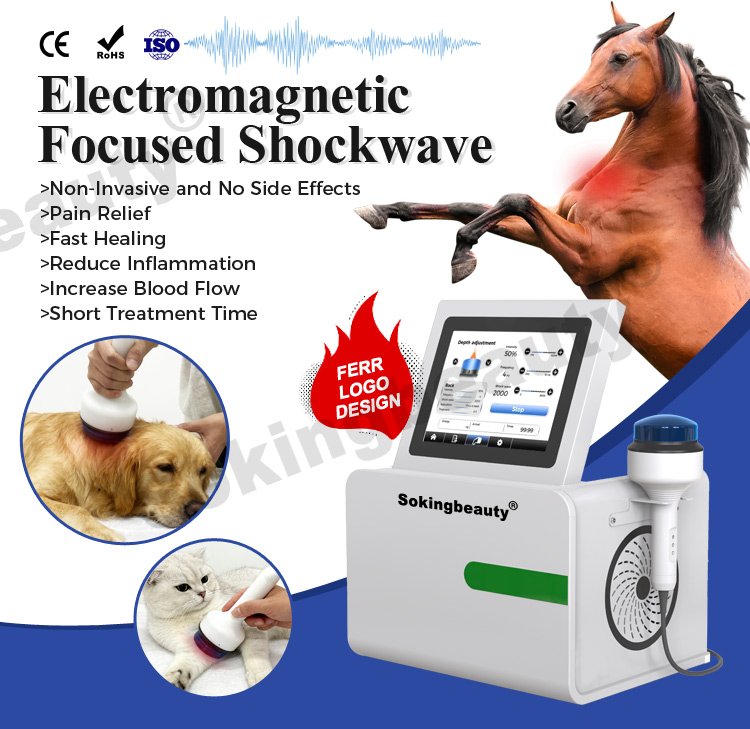
The system uses an electromagnetic energy module, power-management section, focused applicator, control interface, cooling path and safety monitoring. The console houses the drive electronics and user controls, while the applicator transfers acoustic pulses to the selected area. A stable mechanical structure, replaceable contact components and organized cable connections support day-to-day use and easier service planning. The supplied configuration should always be matched with the buyer’s intended animal protocols and local compliance requirements.
Applicator and energy module reference for animal-care protocols.
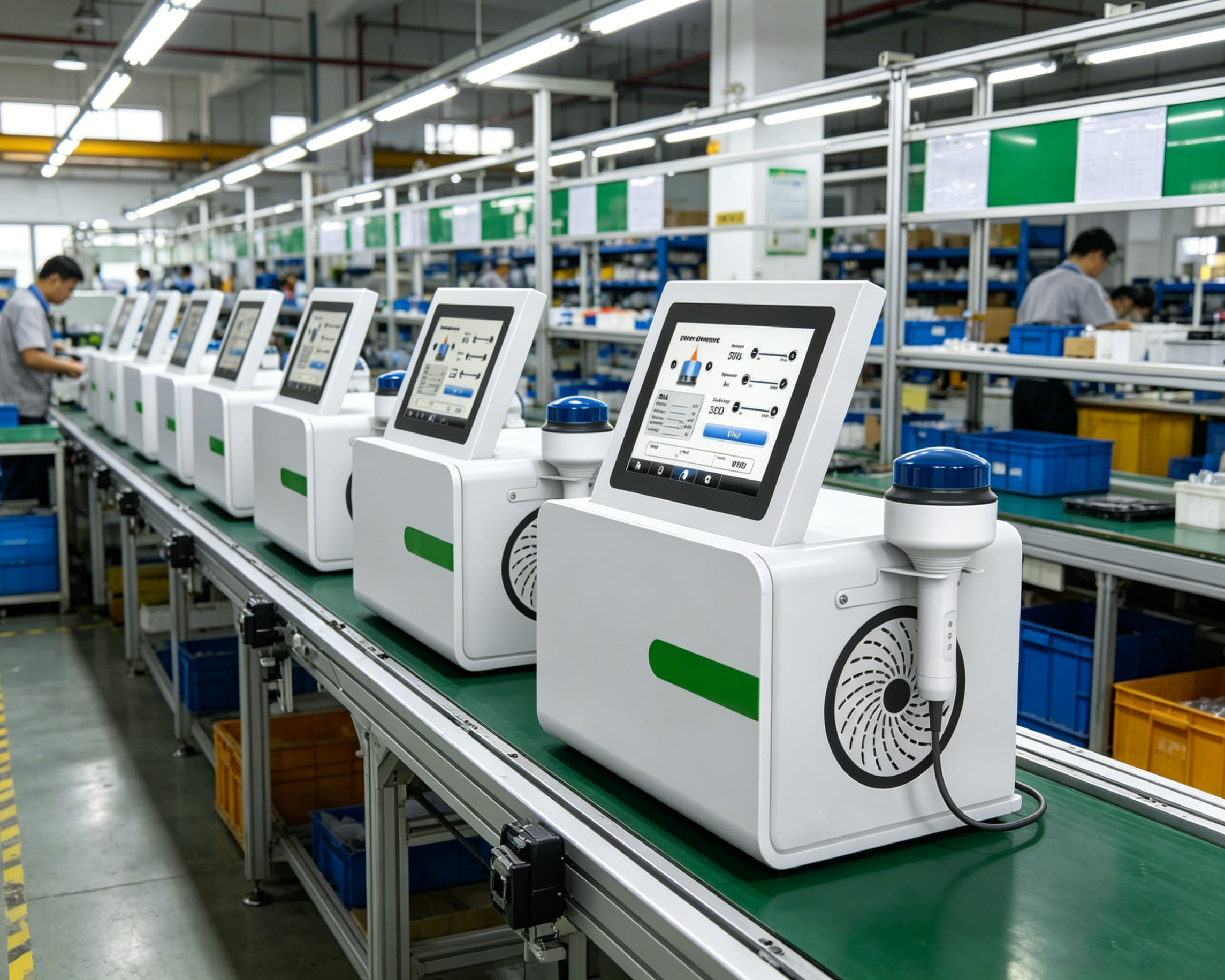
For procurement teams, this architecture separates consumable or serviceable elements from the main console, helping reduce downtime and simplify training for new operators.
When the operator selects a protocol, the control system drives the electromagnetic module to create a repeatable acoustic pulse. The applicator transfers that pulse through suitable contact to the assessed treatment area. The focused design is intended to concentrate energy rather than relying on broad, uncontrolled dispersion. The practical result is a parameter-led workflow: the professional assesses the animal, selects the appropriate applicator setting, applies coupling and monitors tolerance throughout the session. It is not a substitute for veterinary diagnosis or clinical judgment.
Veterinary rehabilitation equipment for equine and companion-animal programs.
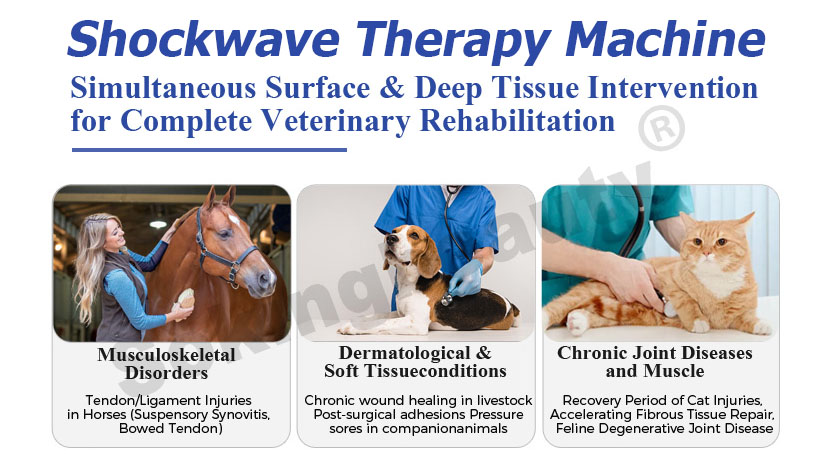
Typical B2B environments include equine rehabilitation centers, veterinary hospitals, companion-animal clinics, sports-medicine practices, university training facilities and distributor demonstration rooms. Horse programs may require a robust workflow for muscle and tendon rehabilitation; companion-animal teams may value a compact interface and gentle parameter progression. Buyers should evaluate patient mix, expected sessions per week, operator skills, room layout, local regulations and available technical support before selecting a configuration.
A well-organized session is easier to explain to owners and easier for teams to repeat. The console gives the operator a clear starting point, while the focused applicator supports deliberate positioning. Clinics can build checklists around assessment, parameter recording, animal observation and post-session cleaning. Distributors can demonstrate the equipment with a consistent presentation and train partners using the same operating sequence.
For clinics requiring concentrated acoustic energy, a structured console and a professional rehabilitation workflow.
For equine centers prioritizing durable handling, repeatable sessions and scalable operator training.
For B2B partners needing a practical system to present, configure and support across regional markets.
For distributors, a spare-parts list, remote training plan and escalation contact should be agreed before volume purchase. Do not open the console or change internal settings without qualified technical authorization.
Compare energy control, applicator design, operator interface, serviceability, training, documentation, warranty terms, OEM/ODM options and total cost of ownership. Ask for a current specification sheet, available accessories, quality documents, lead-time commitment and after-sales process. A reliable supplier should explain what is standard, what is configurable and which claims require local clinical validation. Sokingbeauty can discuss private labeling, regional distribution and a configuration aligned with the buyer’s service model.
It is intended for trained veterinary professionals, equine rehabilitation teams and qualified distributors building animal-care programs.
The platform can support different animal-care scenarios when the applicator, parameters and protocol are selected by a qualified professional.
An electromagnetic module produces controlled acoustic pulses, which the applicator transfers to the selected treatment area.
No. Assessment, contraindication screening and treatment decisions remain the responsibility of the licensed veterinary team.
Confirm configuration, accessories, compliance documents, training, warranty, service response and the intended regional market.
Clean and inspect the unit after use, then follow the supplier’s preventive-maintenance schedule and record service history.
Ask Sokingbeauty about branding, interface or accessory options, minimum order requirements and technical feasibility for OEM/ODM programs.
Share your animal-care focus, expected usage, target market and customization needs so the team can recommend a practical configuration. Product selection should be based on professional assessment, local requirements and a clear service plan.


 English
 中文
 русский язык
 Español